


US business credit cards for your LLC: EIN-only or personal guarantee?
Business cards for your US LLC: the difference between EIN-only cards with no guarantee (Brex, Ramp) and classic bank business cards with personal liability. What fits when. For 2026.
By Chris Natterer · Published June 11, 2026
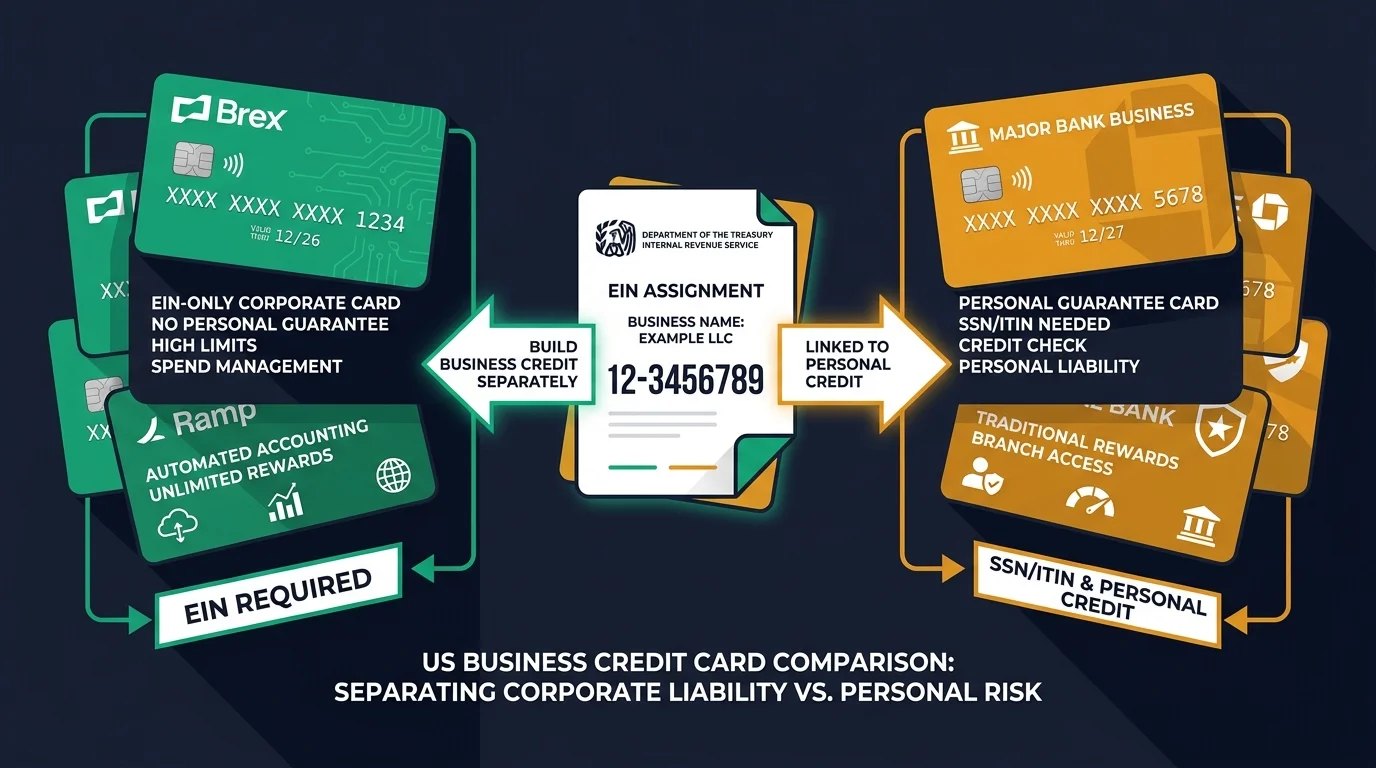
A tempting promise circulates around business cards for the US LLC: a credit card on the company alone, with no SSN and no personal liability. That does exist, but not as unconditionally as it’s sold. There are two fundamentally different kinds of US business card, and the difference decides whether the card fits you.
Two kinds of business card
Ask a single question in front of every card: who’s on the hook if the company doesn’t pay? The answer splits the market into two camps.
EIN-only cards: no personal guarantee
Cards from issuers like Brex or Ramp run purely on the company. They require no personal guarantee, so you’re not personally liable. The EIN is enough to apply, an SSN or ITIN isn’t mandatory.
The catch: these issuers want to see substance. With Brex that’s in the range of a five-figure cash balance, often around 50,000 dollars, or professional funding. A freshly formed LLC with no meaningful capital generally doesn’t get these cards.
And a second important point: EIN-only cards build no personal credit. They help the company’s cash flow and spending, but your personal US credit score doesn’t grow from them. Anyone working toward the personal cards with the big points bonuses doesn’t get there through this route.
Classic bank business cards: with a personal guarantee
Cards like Amex Business or Chase Ink are classic business cards from a bank. They almost always require a personal guarantee, and therefore an SSN or ITIN. You’re personally on the hook if the company doesn’t pay.
In return you get something the EIN-only cards don’t offer: often attractive sign-up bonuses and, depending on the card, a report to your personal credit history. These cards do assume you’re already creditworthy as a person, meaning you have an ITIN and a grown history.
Side by side
| EIN-only (Brex, Ramp) | Bank business card (Amex Business, Chase Ink) | |
|---|---|---|
| Personal liability | no | yes (personal guarantee) |
| Number needed | EIN | SSN or ITIN |
| Requirement | substance, e.g. high cash balance | personal credit |
| Builds personal score | no | depending on the card |
| Typical bonuses | low to moderate | often high |
What makes sense for you
- Freshly formed LLC with little capital, you want to build personal credit: neither route fits ideally here yet. Focus first on a personal entry card and building a score.
- LLC with a decent cash balance, you want to cleanly separate company spending: an EIN-only card is practical, but don’t expect it to build personal credit.
- You already have an ITIN and history, you want to grab business bonuses: a classic bank business card can be worth it, with awareness of the personal liability.
The myth resolved
“A card through the LLC, no SSN at all” is therefore only half the truth. Yes, there are cards with no personal number and no guarantee. But they demand substance and do nothing for your personal score. The EIN is a company number, not a replacement for personal credit. How the three numbers connect is in the piece on ITIN, SSN, and EIN.
The key points
- EIN-only cards (Brex, Ramp): no personal liability, but substance required and no personal credit built.
- Bank business cards (Amex Business, Chase Ink): personal guarantee with an SSN or ITIN, but often bonuses and a score effect.
- Which one fits depends on capital, existing credit, and your goal.
How business cards fit into the overall path is in the overview, US credit cards for non-residents. The company itself I set up for you through LLC formation.
This article explains the basics and is not advice. Issuers’ terms change constantly. Check the current state before you apply for a card.

Written by Chris Natterer
Founder of Globalization Guide, helping international entrepreneurs form and manage US companies since 2019.