
Building a US credit score from zero: the realistic timeline
How to build a US credit score from zero as a non-resident. The real tools, a month-by-month timeline, and the costs. No 'score 700 in five weeks'. For 2026.
By Chris Natterer · Published June 11, 2026
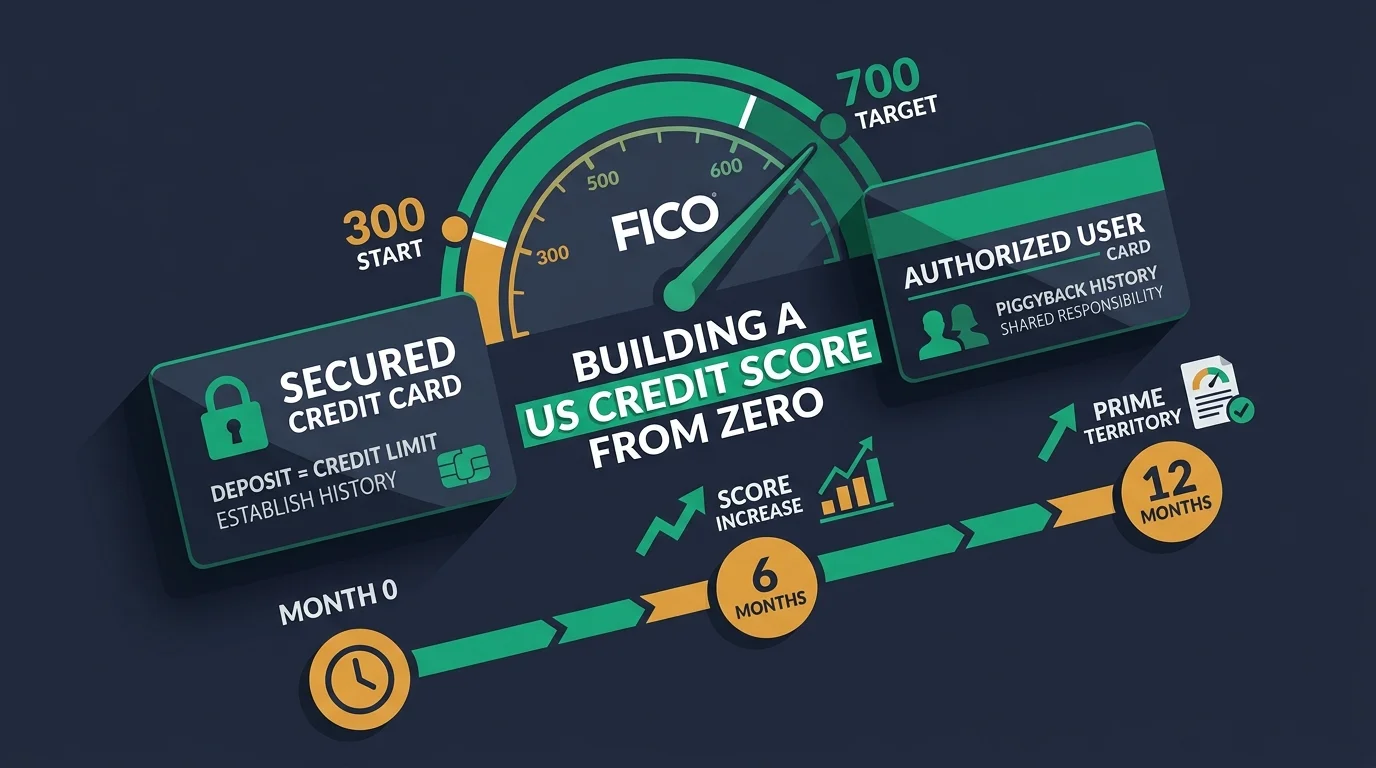
Being seen as creditworthy in the US is the real key to the good credit cards with the big bonuses. Getting a first card is often fast. A workable score, on the other hand, takes time, and no guide on earth can shortcut it. This article shows which tools to start with, how long it takes, and what it costs.
What a credit score actually is
In the US, everyone has a credit score, usually the FICO score. It’s built from your credit history: whether you pay on time, how long you’ve held accounts, how much of your available limit you use, and how many inquiries there have been.
If you’re new to the system, you have no history and therefore no score. They call it “credit invisible.” Important: you’re not rated badly, you simply don’t exist as far as the banks are concerned. So the goal isn’t to improve a bad score, it’s to create a file in the first place and let it grow.
A meaningful FICO score needs at least six months of reported payments. Realistically, count on six to twelve months before the attractive cards open up.
The tools
There are essentially three ways to build a history. They can be combined.
Secured card
A credit card against a deposit. You put down, say, 500 dollars and get a credit limit of the same size. Every on-time payment is reported to the US credit bureaus and builds your score. After a few months of good handling, many issuers convert the card into a normal one and refund the deposit.
Issuers that work for getting started without an SSN include Capital One (secured), Firstcard, Self, and Petal. The deposit isn’t lost money, it’s your own collateral.
Authorized user
You get added to the credit card of someone with good US history as an additional cardholder. Their account record can feed into your score without you ever having to use the card. That assumes such a person exists and trusts you, a partner or family member with a US connection, for example.
Nova Credit (with a caveat)
Services like Nova Credit or Credit Passport try to import your foreign credit into the US. It sounds tempting, but it’s no cure-all. Important, and wrong in many older guides: the partnership between Nova Credit and American Express ended in 2025. Don’t rely on tips that still sell this route as a sure lever.
A realistic timeline
Here’s a sober plan. The exact numbers vary, but the order of magnitude holds.
| Period | What you do | What happens |
|---|---|---|
| Month 0 | Open a secured card (deposit about 200 to 500 dollars), become an authorized user if possible | File gets created |
| Months 1 to 3 | Spend small amounts, always pay in full and on time, keep limit usage low | First reports, score forms |
| Month 6 | Score becomes meaningful for the first time | First simple cards become possible |
| Months 6 to 12 | Continue clean history, add a second card if it makes sense | Score firms up |
| From month 12 | Apply for cards with real sign-up bonuses | Points-and-miles collecting begins |
The most important rule in this table is in months 1 to 3: pay on time and keep limit usage low. Payment behavior is the biggest lever in the FICO score.
The costs
The build is cheaper than many people think. The main costs are:
- The deposit for the secured card: 200 to 500 dollars, which you get back later.
- Possible annual fees on simple entry cards, usually low or zero.
What really costs is not money, it’s patience. Anyone who tries to skip the time with tricks risks more than they gain.
The most common mistake
Even when building a score, the address is the sticking point. Applications with commercial mailbox addresses get recognized and rejected. Make sure you have a consistent, real US address across every office, otherwise the best plan runs into the ground. More on this in the piece on Amex Global Transfer and on a bank-grade business address.
And don’t believe any guide that promises “score 700 in five weeks.” That ignores how the system works. Six months is the lower bound, not the average.
The key points
- Without history you’re credit invisible, not rated badly. The point is to create a file.
- Tools: secured card and authorized user. Nova Credit only with caution, the Amex partnership ended in 2025.
- Count on six to twelve months. Paying on time is the biggest lever.
- The real cost is patience, not money. You get the deposit back.
How building the score fits into the whole path is in the overview, US credit cards for non-residents.
This article explains the basics and is not financial advice. Terms and issuers change. Check the current state before you apply for a card.

Written by Chris Natterer
Founder of Globalization Guide, helping international entrepreneurs form and manage US companies since 2019.