


ITIN, SSN, and EIN: which US number you need for what
SSN, ITIN, and EIN get confused constantly. What the three numbers are, who gets which, and which one you actually need for a US credit card. Explained simply, for 2026.
By Chris Natterer · Published June 11, 2026
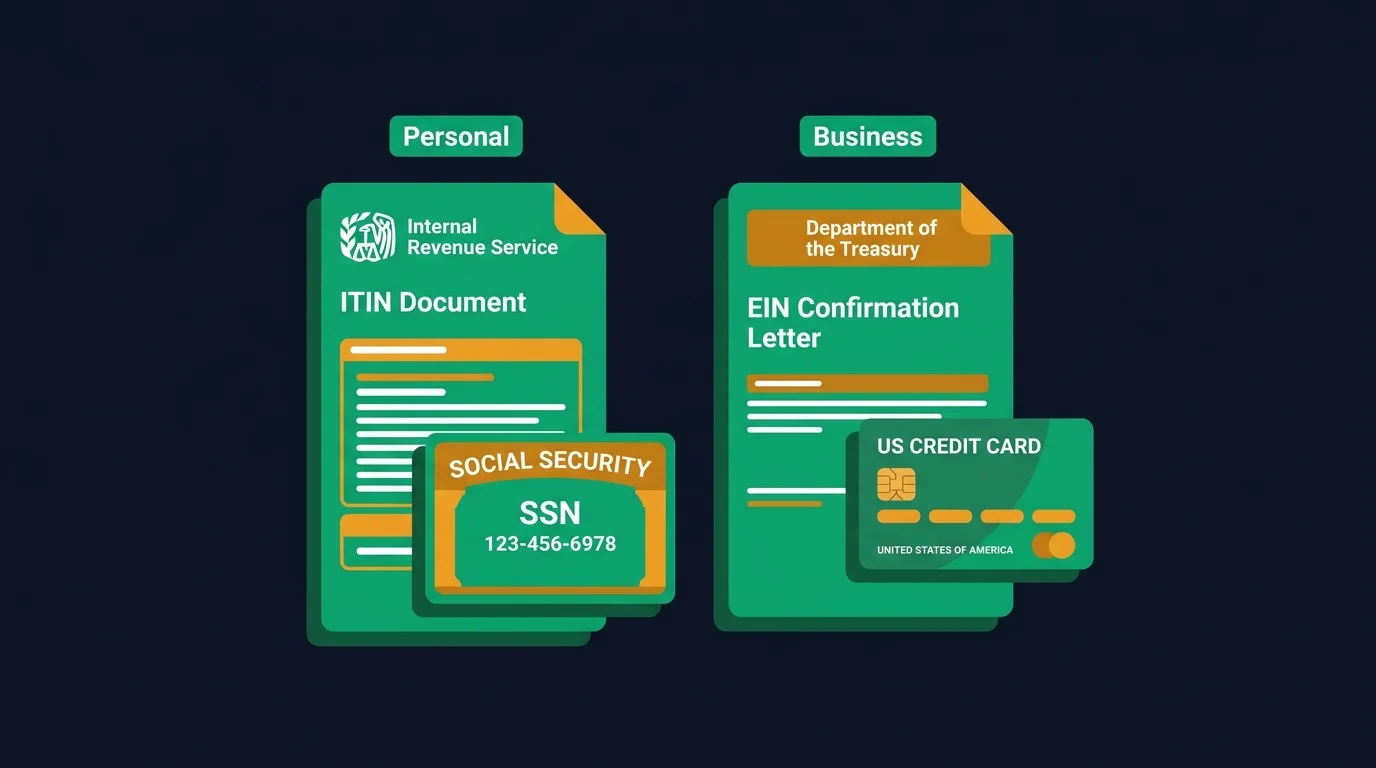
When it comes to US credit cards and US credit, most explanations fall apart on three little acronyms: SSN, ITIN, EIN. They get mixed up, treated as the same thing, or tied to false promises (“with an EIN you don’t need an SSN anymore”). This article sorts it cleanly: what each of the three numbers is, who gets it, and which one you actually need for which purpose.
The short answer up front
- SSN is the personal number for US citizens and certain residents. As a non-resident you generally don’t get it.
- ITIN is the replacement for the SSN on taxes and on personal credit cards. That one you can apply for.
- EIN is your company’s number, not your personal one. It opens business accounts and certain business cards, but no personal cards.
You can read the rest as deeper background. If you only take away one thing: for a personal US credit card, the ITIN is what counts, not the EIN.
SSN: the number you probably won’t get
The Social Security Number is the central personal identifier in the US. It serves social security, taxes, and effectively acts as the identity anchor for the entire financial system, from opening an account to your credit score.
US citizens and people with a corresponding work or residency authorization get an SSN. As an entrepreneur running an LLC from outside the US, where you don’t live, you normally don’t fall into that group. That’s not a problem, it’s the normal case. The ITIN exists for exactly this situation.
ITIN: your replacement for the SSN
The Individual Taxpayer Identification Number is a tax number for people who can’t get an SSN but have a US tax obligation or a tax-related reason. It’s nine digits and looks like an SSN, but starts with a 9.
The decisive thing for our topic: on personal US credit cards, the ITIN replaces the SSN. Seven of the ten largest US card issuers accept an ITIN, including Capital One, Bank of America, Citi, Chase, U.S. Bank, American Express, and Synchrony.
One important distinction many people skip over: ITIN accepted does not mean ITIN approved. The bank lets you apply with an ITIN in the first place. Whether you get the card then depends on your credit history. Without history you’re invisible to the system at first, no matter which number you enter. How that build works is in the piece on the US credit score.
How you get an ITIN
You apply for an ITIN with Form W-7 at the IRS, the US tax authority. You can’t just do it on a whim, you need a recognized reason. The most common reason is a US tax return you have to file anyway.
This is exactly where a clean path opens up for many LLC owners. If you run a US LLC, you’re usually obligated to file the annual Form 5472. That obligation can provide the tax connection that justifies an ITIN application. So you’re not constructing an artificial reason, you’re using an obligation that already exists.
The application requires proof of identity. In practice this runs through an IRS-certified Acceptance Agent who certifies your passport, so you don’t have to mail in the original.
EIN: your company’s number
The Employer Identification Number is the tax number for your US LLC. It identifies the company, not you as a person. With the EIN you open the business account, file tax forms, and can apply for certain business cards.
What the EIN can’t do: get you a personal credit card. A personal card runs on your person, and therefore on your personal number, meaning the SSN or ITIN. The company is a separate legal entity.
The most stubborn myth
A claim circulates online that the EIN bypasses the SSN and ITIN entirely: form an LLC, get the EIN, and get personal cards through it without a personal tax number. That isn’t true.
Only part of it is right: there are business cards that work with just the EIN, from issuers like Brex or Ramp. But those run purely on the company, demand substance like a certain cash balance, and build no personal credit. For the personal cards with the big points bonuses, you still need a personal number and a history. Which business card runs on which requirement is in the piece on US business credit cards.
One more important note
Never run an SSN and ITIN at the same time. If you do eventually get an SSN, the ITIN becomes invalid, and you have to report that to the relevant offices so your credit file gets merged. Two active numbers side by side create chaos and can sink applications.
The key points
- SSN: for US citizens and authorized residents, usually out of reach as a non-resident.
- ITIN: your replacement for the SSN, applied for with Form W-7, often justified through the 5472 obligation you have anyway. It’s the number for personal credit cards.
- EIN: your LLC’s number, good for the business account and business cards, but not for personal cards and not for your personal score.
- The EIN does not replace the ITIN. Anyone who promises that is simplifying incorrectly.
How these numbers fit into the whole path to a US card is in the overview, US credit cards for non-residents. If you don’t want to work through the ITIN application yourself, I handle it as part of the LLC formation and EIN service.
This article explains the basics and is not tax advice. The rules on the ITIN and tax obligations depend on the individual case. Have your specific situation reviewed.

Written by Chris Natterer
Founder of Globalization Guide, helping international entrepreneurs form and manage US companies since 2019.