


The best US credit cards for non-residents, compared
Which US credit cards you can realistically get as a non-resident, and which only come with a score. Entry, Global Transfer, and premium compared, with ITIN suitability. For 2026.
By Chris Natterer · Published June 11, 2026
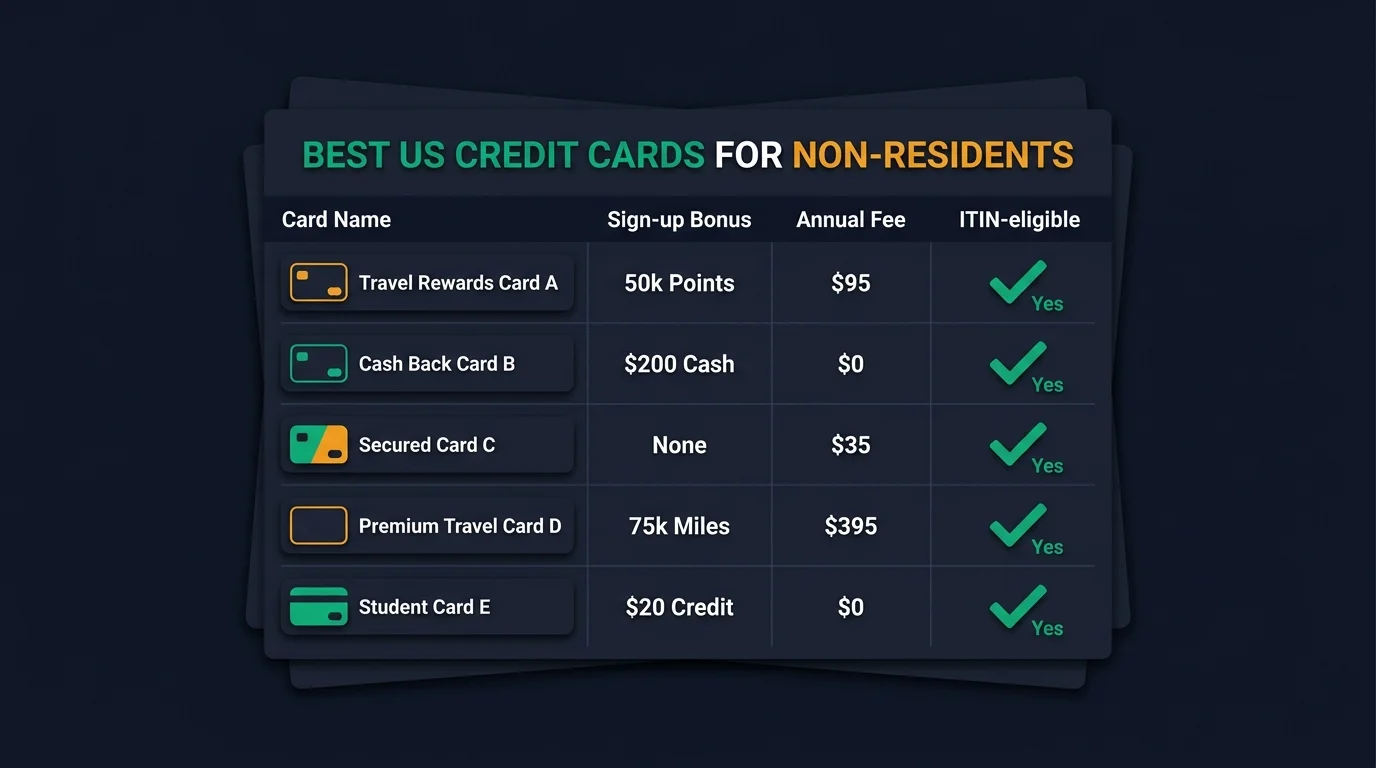
“The best US credit cards” is a tricky headline, because the best card is the one you can actually get. A premium card with an 80,000-point bonus does you no good if you get rejected on the spot for having no history. So this comparison sorts the cards not by shine, but by which phase you can realistically reach which card.
First, the most important distinction
There are two groups of cards, and confusing them is the most common mistake:
- Cards you can realistically get as a newcomer. Entry cards against a deposit, and the one route through Amex Global Transfer.
- Dream cards that assume a built-up score. The premium cards with the big bonuses.
Start in the wrong group and you only collect rejections, and every rejection costs points on your score. So read this comparison top to bottom, not bottom to top.
Group 1: entry, reachable without history
These cards serve the build. Don’t expect big bonuses, expect the start of your file.
| Card / type | Annual fee | ITIN possible | What for |
|---|---|---|---|
| Capital One (secured) | low | yes | The classic for building a score against a deposit |
| Firstcard | low | yes, aimed at non-residents | Entry without an SSN |
| Petal / Self | low | depends on the product | Alternative entry routes |
The mechanism behind it, deposit and on-time payments, is in the piece on building a credit score.
Group 2: via Amex Global Transfer
A special route, not a classic application. If you already have an Amex in your home country, you can get a US Amex through Global Transfer, with no score. Which US Amex exactly depends on your existing card. Remember the limit: only one card, and it produces only a thin history at first.
Group 3: premium, only with a score
Here sit the cards the whole game pays off for in the end. They assume a grown US history and usually an ITIN.
| Card | Profile | Requirement |
|---|---|---|
| Amex Gold | strong points on dining and travel, moderate fee | score + ITIN |
| Amex Platinum | travel flagship, high fee, many credits and lounges | score + ITIN |
| Chase Sapphire Preferred / Reserve | flexible travel points, good redemption values | score + ITIN, mind the Chase 5/24 rule |
Whether the pricey Amex Platinum pays off for you specifically, I look at in a dedicated piece with a fee and break-even calculation.
What to watch when comparing
- Sign-up bonus. The biggest one-time value. The amount swings a lot and changes often, so there are deliberately no fixed numbers here. Check the current offer directly with the issuer.
- Annual fee vs. actual use. A high fee is only fair if you genuinely use the credits and perks.
- Chase 5/24. Chase rejects if you’ve opened five or more new cards in 24 months. Plan the order of your applications.
- ITIN suitability. Seven of the ten largest issuers accept an ITIN. The number alone isn’t enough, though, the score has to hold.
A word of caution on comparison lists
Terms and bonus offers change frequently, and not every comparison list is current or complete. Some even name cards that don’t exist in the stated form at all. So always check the details directly with the issuer. This comparison deliberately names categories and profiles rather than day-to-day bonus figures.
The key points
- The best card is the one you can get. Start in Group 1.
- Entry: secured cards and the Global Transfer route, both reachable without a score.
- Premium cards only after six to twelve months of history and usually with an ITIN.
- Fixed bonus figures change constantly. Always check them directly with the issuer.
The whole path there is described in the overview, US credit cards for non-residents.
This article is a general overview and not financial advice. Terms and availability change constantly. Check the current state before you apply for a card.

Written by Chris Natterer
Founder of Globalization Guide, helping international entrepreneurs form and manage US companies since 2019.